

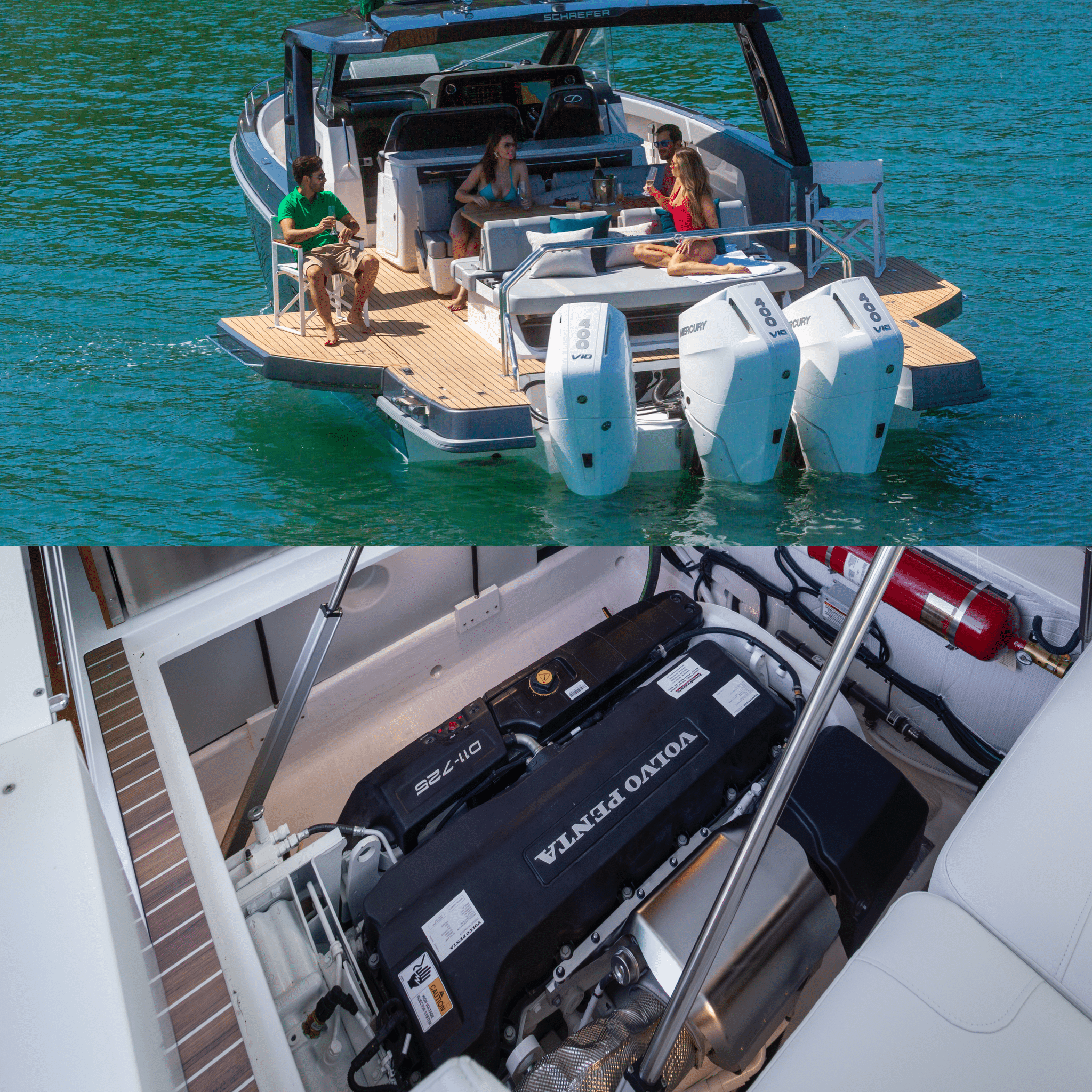
Gas vs. Diesel Boat Engines: How to Choose for New England Cruising
For many New England boaters, the decision between gas and diesel power defines how they cruise, where they go, and the ownership experience for years to come. Both platforms have clear advantages. The right choice depends on how you plan to use your boat, the type of hull and layout you prefer, and your long-term goals for range, speed, maintenance, and resale. As the authorized dealer for Sabre Yachts, Back Cove Yachts, and Helmsman Trawlers, Boston Yacht Sales helps owners compare gas vs. diesel engines with factory-direct insight and real-world local knowledge from Boston Harbor to Cape Cod and Narragansett Bay.
Start With Your Use Profile
Before diving into specs, consider:
- Typical cruising speed and distance
- Day boating vs. multi-day trips
- Seasonal haul-out and storage preferences
- Fuel availability at your home port and along your route
- Priorities across speed, range, noise, draft, cockpit layout, and resale
This framework clarifies which powerplant aligns with your boating lifestyle.
The Case for Diesel Inboards
Modern diesel inboards remain the benchmark for cruising yachts and Downeast-style powerboats.
- Efficiency and range: Diesels deliver superior fuel economy per nautical mile, especially at displacement and semi-displacement speeds. That means longer legs between fuel stops—ideal for runs to Maine, the Islands, or extended shoulder-season cruising.
- Torque and handling: High low-end torque moves heavier boats efficiently and maintains grip in a seaway. Inboards keep weight low and central for balanced handling.
- Safety: Diesel fuel has a higher flash point and produces fewer explosive vapors—an important consideration inside engine rooms.
- Longevity and durability: Properly maintained diesels can log thousands of hours with consistent performance, supporting long-term ownership and strong resale.
- Quiet, comfortable operation: Today’s common rail diesels are notably quieter and smoother than previous generations, with excellent sound attenuation in well-insulated engine rooms.
- Systems integration: Inboards support features long-range cruisers value—shaft or pod drives, gensets, hydraulic systems, and diesel-fired heat for comfortable New England shoulder seasons.
Where you’ll see diesel shine across our lines:
- Sabre Yachts: Premium express cruisers with Volvo IPS for efficient, quiet, high-end cruising.
- Back Cove Yachts (inboard models): Single-diesel simplicity and fuel economy with Downeast elegance.
- Helmsman Trawlers: Pilothouse and sedan trawlers designed for efficient passagemaking and liveaboard comfort on diesel power.
- Schaefer Yachts (DPI, IPS and Inboard models): Express cruisers with Volvo IPS and DPI for efficient and quiet cruising, optional inboard power in the larger models for those who want efficiency but do not want pods.
The Case for Modern Gas Outboards
Four-stroke gas outboards have evolved significantly and can be a compelling choice for owners prioritizing speed, simplicity, and flexibility.
- Speed-to-weight advantage: Outboards deliver quick acceleration and higher top-end speeds on lighter hulls—great for day boating, fishing, and fast island-hops.
- Lower initial cost: Gas power often reduces the purchase price, especially on multi-engine setups.
- Maintenance convenience: Outboards are easier to access, remove, or repower; many owners appreciate winterization simplicity in New England’s seasonal climate.
- Draft and beachability: Raised engines mean shallow-water access and easy service; no running gear below the hull line.
- Quiet cruising: Modern outboards are impressively quiet at idle and low speeds, with refined vibration characteristics.
- Space and layout: Moving engines to the transom frees up interior volume for storage or accommodations.
Where you’ll see gas outboards shine:
- Back Cove 34O and 39O: Outboard performance with Downeast styling for agile day cruising, quick runs to Nantucket or Provincetown, and straightforward seasonal storage.
- Schaefer V33, 375 and V44 with their modern styling and efficient living space, these are sure to turn heads cruising the waters of New England
Cost, Fuel, and Service: What to Expect
- Fuel burn: Diesel wins on gallons-per-hour and range at displacement and moderate cruising speeds. Gas outboards can be very efficient at planing speeds on lighter boats, but generally use more fuel than comparable diesels on heavier cruisers.
- Fuel price and availability: Both gas and diesel are readily available across New England’s marinas; diesel is especially common at yacht-oriented fuel docks.
- Maintenance: Diesel parts and service can be more expensive, but intervals are often longer and longevity higher. Outboards are easy to service and repower; multi-engine setups add components but offer redundancy.
- Lifecycle value: Diesel-powered yachts tend to retain value well in the cruising market. Outboard yachts benefit from straightforward repower options that can refresh performance and appeal.
Handling, Layout, and Onboard Experience
- Center of gravity: Inboard diesels keep weight low and centered for a stable ride in a chop—an asset in New England’s variable seas.
- Noise profile: Both platforms have advanced; inboards benefit from insulation, outboards from separation on the transom. Sea trials reveal meaningful differences by model.
- Cockpit and swim platform: Outboards free interior space but occupy transom real estate; inboards preserve a full swim platform and often easier boarding for cruising.
Matching Engines to Your Cruising Style
- Choose diesel if you value: Long-range efficiency, seaworthy balance, lower fire risk, integrated cruising systems, and strong resale—hallmarks of Sabre Yachts, Back Cove inboards, Schaefer Cruisers and Helmsman Trawlers.
- Choose gas outboards if you value: Speed, simplicity, lower initial cost, shallow draft, and seasonal ease—well expressed in both Schaefer Yachts and Back Cove outboard series.
Why Work With Boston Yacht Sales
As a CPYB-certified brokerage and authorized dealer for Sabre, Back Cove, Schaefer Yachts and Helmsman, Boston Yacht Sales aligns your power choice with the right hull, layout, and options package. Our team collaborates directly with the factories to configure engines, props, pods, and systems around your cruising plans—whether that’s a diesel-powered Sabre for quiet, efficient passages or an outboard Back Cove for fast day trips. From Weymouth HQ to Marblehead, Falmouth, and Portsmouth, RI, we bring deep local knowledge, meticulous brokerage services, and a seven-decade commitment to transparent client service.
Conclusion: Both gas and diesel platforms offer compelling benefits. The best answer is the one that fits how you actually boat. Connect with Boston Yacht Sales to compare real fuel data, review maintenance plans, and schedule sea trials so you can make a confident, informed decision for New England waters.